


Written by Katia Knight, Director of Biotech Initiatives
I recently had the chance to attend BIO Boston 2025—one of the largest life sciences conferences in the world. Held at the Boston Convention & Exhibition Center from June 16–19, it brought together over 20,000 participants, the equivalent of the city of Keene, NH’s entire population. Known for being the most comprehensive gathering in the biotech industry, I knew I was in for a treat, but I didn’t realize just how much it would give me to think about.
At the Hannah Grimes Center, we’re working to grow the biotech industry right here in the Monadnock Region of Southwest New Hampshire. Mainly rolling hills, lush forest and beautiful ponds, this might not be the first place that comes to mind when you think of biotechnology. But it should be.
What is Biotech?
In our office, we often joke about what biotech actually means. That definition really matters—especially when we’re trying to understand which businesses we want to attract and grow, and how we can serve entrepreneurs already working on biotech in our own backyard. And in a rural setting, where biotech might mean anything from advanced diagnostics to regenerative agriculture to biochar production, the definition isn’t just semantic—it shapes the future we’re building.
After a lot of reflection and discussion, we’ve landed on this working definition: Biotech refers to the use of biological systems or living organisms to develop products and solutions that improve health, environmental sustainability, and quality of life.
It’s intentionally broad, because we think biotech should include more than just cutting-edge labs. It should include soil and farms, forests and materials, clean water, and community health. An ecosystem approach to biotech if you will.
What Does it Mean for New Hampshire Life Sciences?
The biotech featured at BIO Boston leaned heavily toward medtech and life sciences. For those of us not embedded in daily lab work, the pace of progress in this space is almost hard to grasp. There were startups engineering personalized genetic therapies that target illnesses at the cellular level; I met founders developing game changing approaches to treating cancer, curing (as opposed to managing symptoms of) Parkinson’s, and expanding our understanding of diseases like Crohn’s. Personalized medicine—once the stuff of science fiction—is rapidly becoming reality. The impacts and promises of Gen AI and its imminent next generation Agentic AI* were on the tips of everyone’s tongues. Of the entrepreneurs I spoke to, their ambition was matched by a clear need: SEED-stage capital, guidance, and places to grow supported by a wider ecosystem of businesses and caregivers —maybe even rural places like ours.
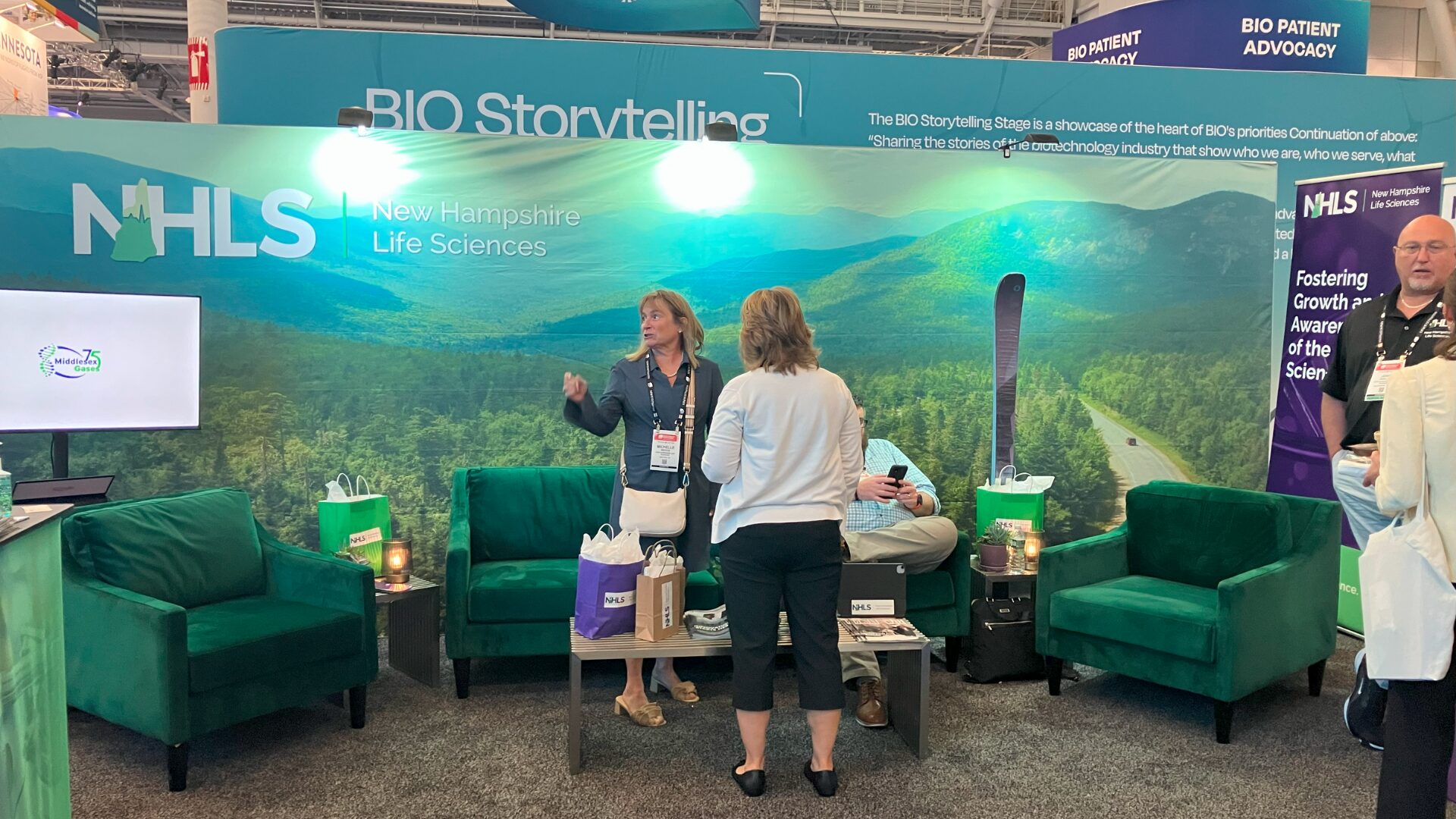
Right at the heart of the expo floor was the New Hampshire Life Sciences booth – bright, welcoming, and buzzing with energy, manned (and womanned) by the incredible team of Andrea, Cindy, and John. Though only established in 2023, NH Life Sciences has already carved out a strong identity. It’s the statewide life sciences association—built by the industry, for the industry—with a mission to foster growth and awareness, and to attract and retain world-class talent and innovation right here in New Hampshire. A savvy tactical partnership with Stoneface Brewery sealed the deal: at 4pm sharp, crowds gathered to enjoy a cool NH brew, showcasing, with charm and strategy, why New Hampshire is the place to be.
As inspiring as it is to see the future of medicine unfold on this dazzling global stage, it also can feel worlds away from some of the values that many of the people in my community strive hard to hold dear: connection, relationships, balance and presence. Many around me are trying to disconnect more from screens and tech—not integrate them deeper into every moment of their lives. This doesn’t mean opting out. It often means trying to have one foot in both worlds AND keep a level head!
For the Hannah Grimes Center, it means, as much as possible, hosting in-person, cohort-based programming that brings people together to share knowledge and experiences, as well as create community. And in those sessions, we may be teaching the group (or learning from each other about) how to leverage AI and use technology to their best interest (and when not to!). It means hosting nationally popular events like Radically Rural, which brings hundreds of people from across the country together to celebrate and share inspiration coming out of rural areas. And for me, in my work growing the Hannah Grimes biotech supporting initiatives, it means thinking about how innovation can serve people and living systems, not just increase profit or speed, and what a community’s role can be to help these burgeoning businesses grow and succeed.
Attending events like BIO Boston and events at Venture Cafe in Boston and others reminds me that the future of biotech is both dazzling and that rural regions like ours must find our own unique ways to engage with it. Not by trying to copy what’s happening in cities, but by building a distinct rural biotech ecosystem rooted in the assets we have, the people that live here, and the unique set of problems and opportunities we face here.
*Whereas Generative AI is artificial intelligence that can create original content—such as text, images, video, audio or software code—in response to a user’s prompt or request – Agentic AI describes AI systems that are designed to autonomously make decisions and act, with the ability to pursue complex goals with limited supervision. It’s a proactive AI-powered approach, whereas gen AI is reactive to the users input. Agentic AI can adapt to different or changing situations and has “agency” to make decisions based on context.