


We were recently asked, “What do you do when somebody comes to you with a bad business idea?” This is a situation that could get uncomfortable quickly, but it’s also one that we’ve given a lot of thought to as a programs team over the years.
We don’t ever want to crush the entrepreneurial spirit alive in those who walk through our doors. We also don’t want to convey unrealistic expectations of success to people who are trying to make a living. There are definitely a few things to know before starting a business.
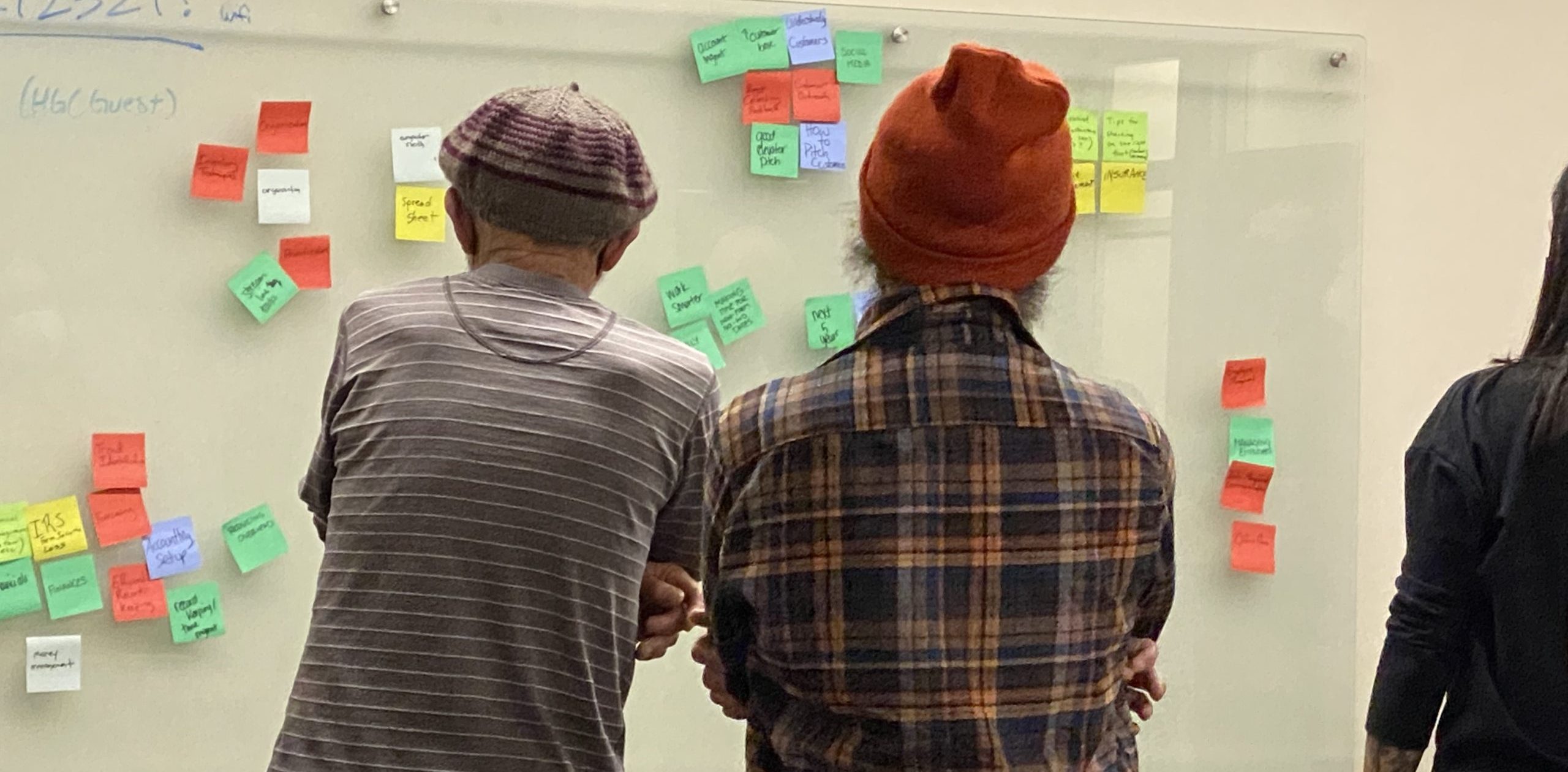
Entrepreneurship is not an easy road and financial success isn’t something we can guarantee. At Hannah Grimes, we present our clients with resources, training, and support so they can decide if starting a business is the right path forward. In our eight-week Business Lab, we ask questions like:
- What price do you need to charge to cover materials, overhead, and your own pay?
- Is there a customer base willing to pay that price?
- Will you handle marketing, bookkeeping, and other admin work yourself, or can you afford to outsource it?
- If you’re working with a partner, do you share the same vision?
Based on the answers to those questions, we find that clients come to one of the following solutions:
This Business Idea isn’t Profitable
These clients might decide entrepreneurship isn’t for them period, they may take what they’ve learned and apply it to a family or friend’s business, or they may come back months or even years later with a new idea that is profitable.
I Just Want to Cover the Cost of My Hobby
These clients aren’t looking for a primary income source. They just want to keep doing the thing they love and sell enough to cover the cost of the raw materials. Think of your friend who sells scarves and blankets to cover the cost of her yarn because she loves knitting.
This is Going to Work
These clients are able to price their goods or services in such a way that people are willing to buy them and they have a plan to start paying themselves. Or, they’re ready to make changes so that’s the case.
We don’t use “business started” as our only success metric. All of these outcomes are wins as far as we’re concerned.
Written by Lillian Chase, Program & Development Coordinator.